
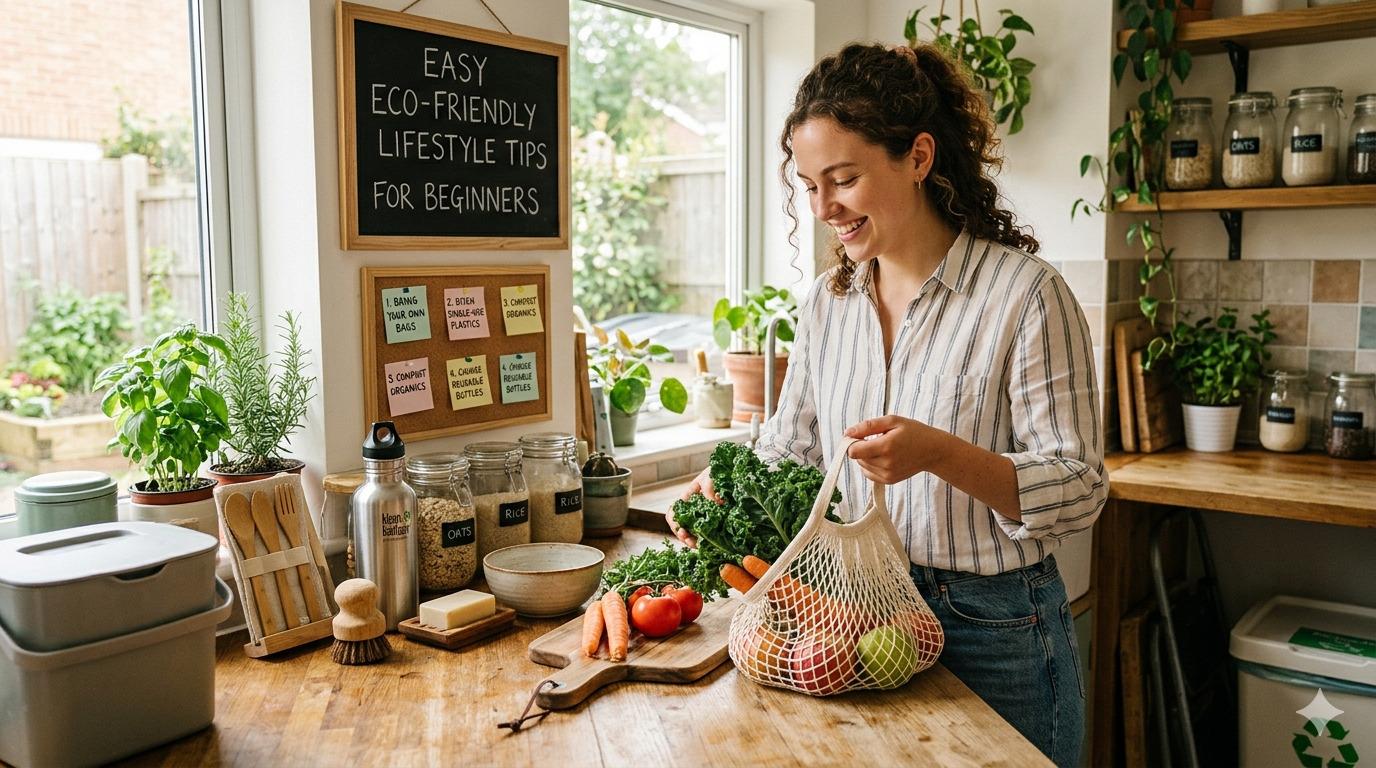
Easy Eco-Friendly Lifestyle Tips for Beginners: A Practical Guide to Sustainable Living”
Living sustainably doesn’t require major lifestyle changes. Small, consistent actions can significantly reduce your environmental impact while often saving money and improving your quality of life. Here are some practical eco-friendly habits anyone can adopt today.
1. Reduce Single-Use Plastics
One of the easiest ways to live more sustainably is to reduce your reliance on single-use plastics. Plastic bags, bottles, straws, and food containers often end up in landfills and oceans, where they can take hundreds of years to decompose.
Consider carrying a reusable water bottle, shopping bag, and coffee cup wherever you go. These small changes can significantly reduce the amount of plastic waste you generate each year.
2. Save Energy at Home
Reducing energy consumption not only helps the environment but can also lower your utility bills. Start by turning off lights and electronic devices when they’re not in use. Replace traditional incandescent bulbs with energy-efficient LED lighting, which uses less electricity and lasts longer.
You can also make use of natural sunlight during the day and unplug chargers or appliances that consume power even when idle.
3. Conserve Water
Water is one of our most valuable resources, yet it is often wasted through everyday habits. Simple actions such as taking shorter showers, turning off the tap while brushing your teeth, and fixing leaking faucets can save thousands of liters of water annually.
Installing water-efficient fixtures and collecting rainwater for gardening are additional ways to reduce water consumption and support sustainable living.
4. Choose Sustainable Transportation
Transportation is a major contributor to greenhouse gas emissions. Whenever possible, consider walking, cycling, or using public transportation instead of driving alone.
For longer trips, carpooling can help reduce fuel consumption and emissions. If you’re planning to purchase a new vehicle in the future, researching fuel-efficient or electric options can further minimize your environmental impact.
5. Practice Smart Shopping Habits
Sustainable living starts with mindful consumption. Before making a purchase, ask yourself whether you truly need the item. Choosing quality products that last longer often reduces waste and saves money over time.
Supporting local businesses and purchasing locally produced goods can also help reduce transportation-related emissions while strengthening your community’s economy.
6. Reduce Food Waste
Food waste is a significant environmental issue. When food is discarded, all the resources used to produce, transport, and package it are wasted as well.
You can minimize food waste by planning meals, creating shopping lists, and storing food properly. Using leftovers creatively and composting food scraps are excellent ways to reduce the amount of waste sent to landfills.
7. Switch to Eco-Friendly Household Products
Many conventional cleaning products contain harsh chemicals that can harm the environment. Consider switching to environmentally friendly alternatives made from natural ingredients.
Products such as biodegradable cleaners, reusable cleaning cloths, and refillable containers can help reduce both chemical pollution and plastic waste. You can even make simple cleaning solutions at home using ingredients like vinegar, baking soda, and lemon.
8. Embrace Sustainable Fashion
Fast fashion contributes significantly to environmental pollution and waste. Instead of buying trendy clothing that may only be worn a few times, focus on building a wardrobe with durable, versatile pieces.
Shopping at thrift stores, donating unwanted clothing, and choosing brands that prioritize ethical and sustainable practices are excellent ways to reduce the environmental impact of your fashion choices.
9. Start Recycling Correctly
Recycling plays an important role in waste management, but it’s essential to do it correctly. Learn your local recycling guidelines and separate materials properly.
Items such as paper, cardboard, glass, and certain plastics can often be recycled and turned into new products. Avoid placing contaminated materials in recycling bins, as they can interfere with the recycling process.
10. Spend More Time in Nature
Developing a deeper connection with nature can inspire long-term environmental responsibility. Spending time outdoors helps people appreciate the importance of protecting ecosystems and natural resources.
Whether it’s hiking, gardening, birdwatching, or simply enjoying a local park, engaging with nature encourages sustainable habits and fosters environmental awareness.
Benefits of an Eco-Friendly Lifestyle
Adopting sustainable habits offers numerous benefits beyond environmental protection. Many eco-friendly practices can save money by reducing energy, water, and consumption costs. Sustainable living can also improve personal health through cleaner environments, healthier food choices, and increased physical activity.
Additionally, choosing environmentally responsible habits contributes to a global effort to combat climate change, reduce pollution, and conserve resources for future generations.
Conclusion
Living an eco-friendly lifestyle doesn’t have to be complicated or expensive. By making small, intentional changes in your daily routine, you can significantly reduce your environmental footprint while enjoying a healthier and more mindful way of life.
Start with one or two habits that feel manageable and gradually build from there. Remember, sustainability is not about perfection