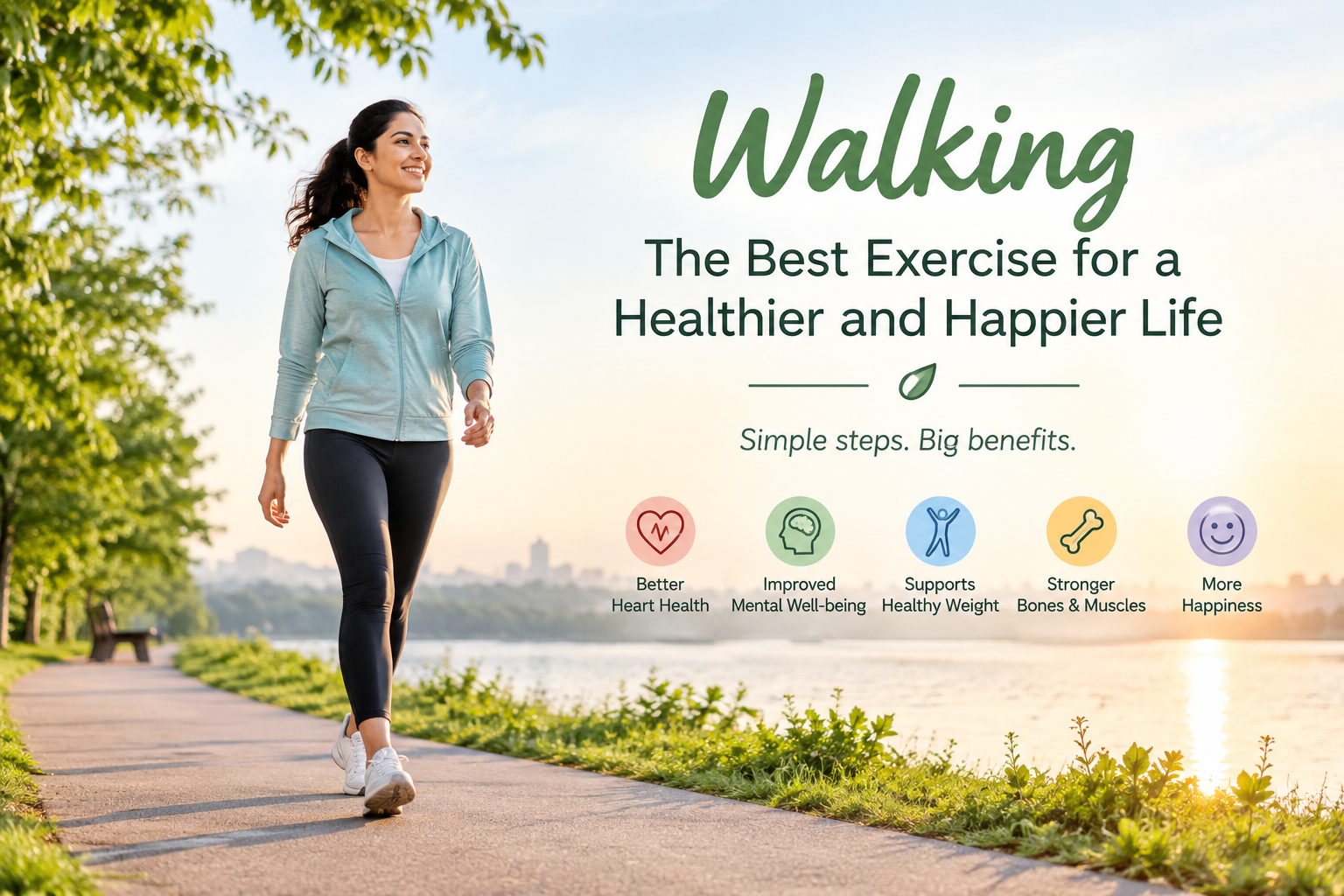
Walking: The Best Exercise for a Healthier and Happier Life
What if one of the simplest ways to improve your health was already available to you—and it did not require an expensive gym membership, complicated equipment, or an intense workout routine?
That simple activity is walking.
Walking is often underestimated because it feels so natural and effortless. Yet, when done regularly, walking can become one of the most effective forms of exercise for supporting physical health, mental well-being, and overall quality of life. Whether you are taking a morning walk, walking to work, enjoying an evening stroll, or simply choosing the stairs and moving a little more throughout the day, every step matters.
In a world where wellness can sometimes feel complicated, walking offers something refreshing: simplicity.
Why Is Walking Considered One of the Best Exercises?
Exercise does not always have to mean intense workouts or spending hours at the gym. The best exercise is often the one you can enjoy and continue doing consistently.
Walking is accessible to most people and can easily become part of everyday life. You can walk alone, with friends or family, outdoors, or even indoors. You can make it relaxing or increase your pace when you want a more active workout.
Regular walking can support cardiovascular fitness, strengthen muscles and bones, improve mobility, and help maintain overall physical well-being. More importantly, it is an activity that can fit naturally into almost any lifestyle.
The secret is not necessarily walking harder. It is walking consistently.
1. Walking Supports Heart Health
One of the biggest benefits of regular walking is its positive contribution to cardiovascular health.
A brisk walk gets your heart beating faster and encourages your body to use oxygen more efficiently. When walking becomes part of your regular routine, it can contribute to better cardiovascular fitness and support a healthy lifestyle.
You do not need to walk for hours to make movement meaningful. Even short walks throughout the day can help you become more active.
Think of it as building a healthy habit one step at a time.
2. Walking Can Help Improve Mental Well-Being
We often focus on exercise as something that benefits the body, but movement can also be valuable for the mind.
A quiet walk outdoors can provide a much-needed break from screens, work, studies, and everyday responsibilities. Spending time outside, noticing your surroundings, and allowing your mind to slow down can make a simple walk feel surprisingly refreshing.
Walking can also be a wonderful opportunity to clear your thoughts. Sometimes, the best ideas arrive when we stop sitting at a desk and simply start moving.
This is why walking can become more than physical exercise—it can become a form of mental wellness.
3. Walking Helps Build an Active Lifestyle
Modern life has made it increasingly easy to remain sedentary. We sit while working, studying, travelling, watching television, and using our phones.
Walking provides a simple way to introduce more movement into the day.
Instead of thinking only about a formal workout, look for small opportunities to walk. Take a short walk after a meal, walk while talking on the phone, choose a slightly longer route, or spend a few minutes walking in the evening.
These small decisions may seem insignificant individually, but together they can create a more active lifestyle.
4. Walking Can Support Healthy Weight Management
Physical activity plays an important role in maintaining a healthy balance between the energy we consume and the energy our bodies use.
Walking uses energy while being relatively gentle compared with many high-impact forms of exercise. For people who are beginning their fitness journey, it can be an approachable way to become more physically active.
However, healthy living should never be reduced to a number on a weighing scale. A better goal is to focus on feeling energetic, staying active, eating nutritious foods, sleeping well, and developing sustainable habits.
Walking fits beautifully into that bigger picture.
5. Walking Can Strengthen Everyday Fitness
Walking may look simple, but it involves many muscles working together. Regular walking can help support strength and endurance in the legs and improve functional fitness—the kind of fitness that helps you move comfortably through everyday life.
Walking on different surfaces or including gentle inclines can make a walk more challenging. However, there is no need to turn every walk into a competition.
Sometimes, a comfortable walk is exactly what your body needs.
6. Walking Gives You Time to Reconnect
One of the most overlooked benefits of walking is the opportunity it creates to reconnect—with yourself, with nature, and with other people.
A walk with a friend can turn exercise into meaningful social time. A family evening walk can become a daily tradition. A solo walk can give you a few peaceful moments away from the noise of everyday life.
In a highly connected digital world, walking can offer something surprisingly valuable: time away from the screen and closer to real life.
How to Make Walking a Daily Habit
The biggest challenge is often not walking itself—it is making walking a regular part of your routine.
Start small.
You could begin with a short daily walk and gradually increase the duration or pace as it becomes comfortable. Choose a time that fits naturally into your schedule. Some people enjoy walking in the morning, while others prefer an evening walk after completing their work.
Here are a few simple ideas:
- Take a short walk during a break.
- Walk while having a phone conversation.
- Take an evening stroll with family.
- Explore a nearby park or quiet street.
- Choose walking for short journeys when practical.
- Set aside time each day simply to move.
Most importantly, avoid making your routine unnecessarily complicated.
Walking Is More Than Exercise
Perhaps the greatest thing about walking is that it does not feel like a chore when you find your own rhythm.
You can walk to think, walk to relax, walk to spend time with someone, or simply walk because your body needs movement.
There will be days when you walk quickly and days when you move slowly. There will be days when you have plenty of energy and days when a gentle stroll feels like enough.
That is perfectly okay.
Health is not created by one perfect workout. It is built through the small choices we make repeatedly.
The Final Step
In a world full of complicated fitness programs and constantly changing wellness trends, walking remains beautifully simple.
It requires little equipment, can be adapted to different lifestyles, and can become part of everyday life. From supporting physical fitness to creating space for mental relaxation, the benefits of walking go far beyond simply counting steps.
So, the next time you think you need a complicated exercise plan, remember that sometimes the best place to begin is right outside your door.
Put on your comfortable shoes, step outside, and start walking.
Because better health does not always begin with a giant transformation. Sometimes, it begins with one simple step.