Gut-Brain Health: How Your Gut Affects Your Mood, Mind and Overall Well-Being
Have you ever had butterflies in your stomach before an important meeting?
Or lost your appetite after receiving upsetting news?
Maybe you have noticed that when life gets stressful, your digestion seems to notice it too.
These everyday experiences tell us something interesting: the gut and the brain are not as separate as we once thought.
In fact, your digestive system and your brain are in constant communication. Scientists call this relationship the gut-brain axis, and it is becoming one of the most fascinating areas of modern health and wellness.
The conversation happens quietly, every day — through nerves, hormones, immune signals and the trillions of microorganisms living inside your gut.
And while researchers are still discovering exactly how this relationship works, one thing is becoming increasingly clear: gut-brain health is an important part of whole-body well-being.
It is also a reminder that health is rarely about one isolated organ or one perfect habit.
Sometimes, taking care of your mind begins with taking a little better care of your gut.
What Is Gut-Brain Health?
Gut-brain health is about the relationship between your digestive system, your gut microbiome and your brain.
Your gut is home to trillions of bacteria and other microorganisms. Together, they form a complex ecosystem known as the gut microbiome.
Far from being passive passengers, these microorganisms interact with your body in many ways. They help process certain components of food, support normal digestive functions and interact with the immune system.
And they are part of the conversation with your brain.
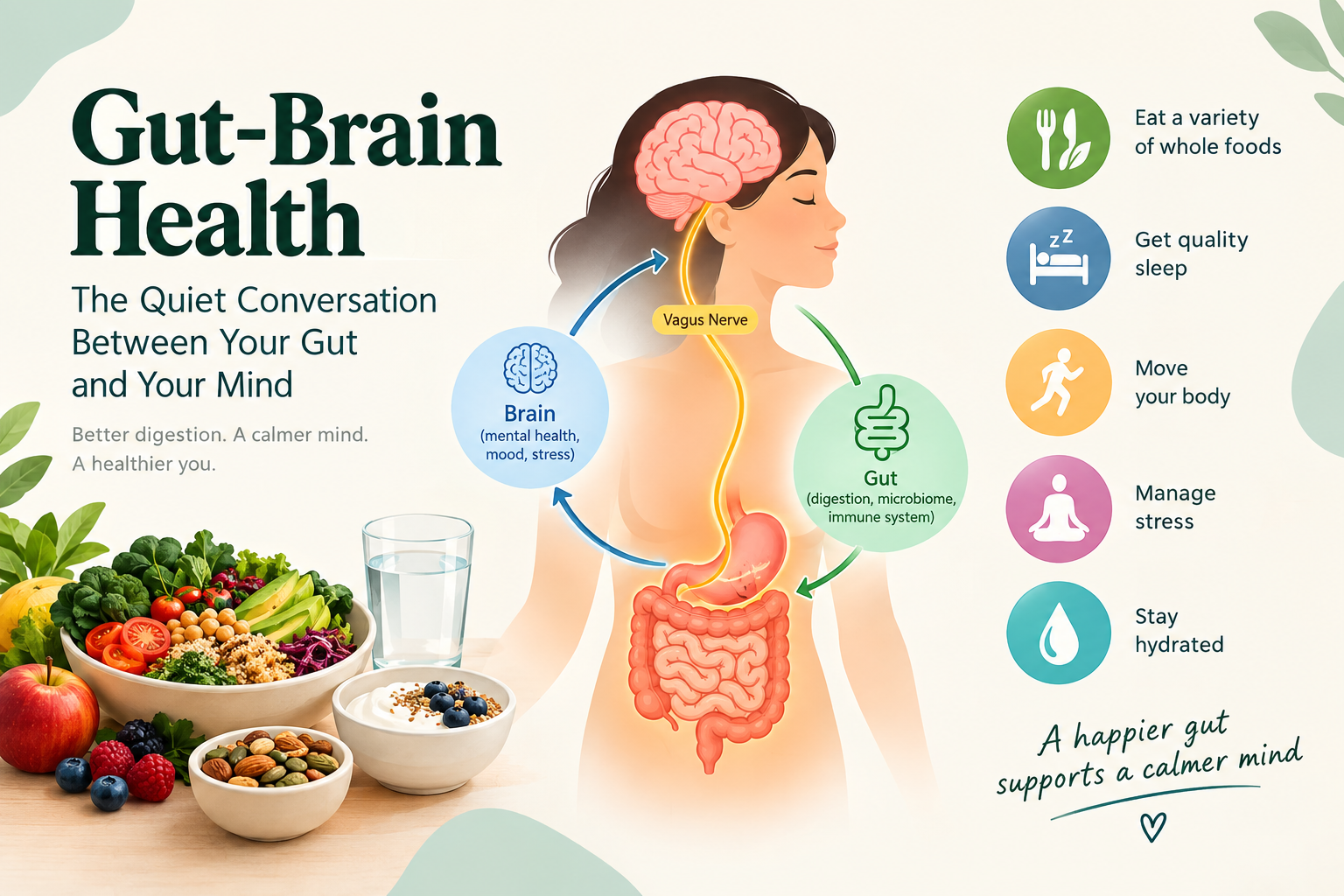
One of the important communication pathways is the vagus nerve, which connects the digestive system with the brain. Other messages travel through immune, hormonal and metabolic pathways.
So when we talk about gut health and mental health, we are not simply talking about another wellness trend.
We are talking about a fascinating biological relationship that scientists are still working to fully understand.
Your Gut Can Feel Your Stress
We have all experienced it.
A stressful day can leave you with a tight stomach. Nervousness can make you rush to the bathroom. Anxiety can change your appetite.
This happens because your brain and digestive system respond to each other’s signals.
When your body experiences stress, the nervous system can influence digestion, gut movement and sensitivity. For some people, prolonged stress can be accompanied by symptoms such as bloating, abdominal discomfort or changes in bowel habits.
And the communication goes the other way too.
What happens in your gut can send signals towards your brain.
This is why taking care of your gut should not be viewed only as a way of supporting digestion. It can be part of a much bigger approach to feeling well — physically and emotionally.
Your Gut Microbiome Loves Variety
When it comes to the gut microbiome, there is no single magic food that can suddenly make everything better.
The gut is an ecosystem, and ecosystems thrive on diversity.
Your everyday food choices help shape the environment in which your gut microorganisms live. A diet containing a wide variety of fibre-rich plant foods can provide nourishment for different types of beneficial microorganisms.
This is where healthy eating becomes much less complicated than we sometimes make it.
You don’t need an expensive list of superfoods.
Instead, think about variety.
A bowl of oats with fruit.
A colourful vegetable curry.
Lentils with brown rice.
A handful of nuts and seeds.
A bowl of yoghurt.
Seasonal fruits.
Beans, chickpeas, leafy greens and whole grains.
Different foods provide different nutrients and types of fibre — and variety is one of the simplest ways to make your meals more nourishing.
What Should You Eat for Better Gut-Brain Health?
There is no universal “gut-brain diet”.
But a balanced diet centred around whole and minimally processed foods is a sensible foundation.
Add More Fibre
Fibre is an important part of a gut-friendly diet because certain gut microorganisms use it as nourishment.
Try including vegetables, fruits, legumes, whole grains, nuts and seeds in your regular meals.
If your current diet is low in fibre, increase it gradually and make sure you drink enough water.
Bring Colour to Your Plate
Instead of worrying about whether one food is a superfood, aim for a colourful plate.
Different fruits and vegetables contain different fibres and plant compounds. Eating a broad variety can help create a more diverse and nourishing diet.
Think green, red, orange, purple and yellow.
Nature rarely puts all its goodness into one food.
Consider Fermented Foods
Foods such as yoghurt, kefir and certain fermented vegetables can also be included as part of a balanced diet.
Fermented foods have received growing attention for their relationship with the gut microbiome.
But there is no need to force yourself to eat something simply because it is currently trending.
Choose foods you enjoy and can comfortably include in your normal routine.
It Is Not Just About Food
Perhaps one of the biggest mistakes we make when talking about gut health is focusing entirely on what is on our plate.
Your lifestyle matters too.
Sleep matters. Movement matters. Stress matters.
Regular physical activity, adequate sleep and healthy ways of managing stress are all important parts of overall well-being.
Think about your daily routine.
You may eat a healthy breakfast but rush through it while answering emails.
You may have a nutritious lunch but spend the entire afternoon sitting.
You may eat a wholesome dinner and then stay awake scrolling until midnight.
Health is not created by one perfect meal.
It is created by the pattern of your days.
Sometimes, the healthiest thing you can do for your gut is simply slow down.
Take a walk.
Eat without rushing.
Put your phone away for a while.
Take a few deep breaths.
Go to bed when your body is asking for rest.
These things may sound ordinary, but ordinary habits often have the greatest staying power.
Can Gut Health Affect Your Mood?
This is where the gut-brain connection becomes particularly interesting.
Scientists are studying how changes in the gut microbiome may be associated with mood, stress and cognitive function.
Some microorganisms in the gut produce substances that can interact with immune, metabolic and nervous-system pathways. This has led researchers to explore the possible relationship between the gut microbiome and brain health.
But it is important to keep expectations realistic.
Gut health is not a miracle cure for anxiety, depression or other mental-health conditions.
If you are struggling with persistent emotional or psychological symptoms, professional support matters.
The gut-brain connection should be seen as another piece of the wellness puzzle — not a replacement for proper medical or mental-health care.
Simple Gut-Brain Health Habits
Supporting your gut-brain health doesn’t require an expensive wellness routine.
Start with a few simple habits:
- Add another serving of vegetables to your day.
- Choose whole grains more often.
- Include beans, lentils or chickpeas in your meals.
- Eat a wider variety of fruits and vegetables.
- Include suitable fermented foods if you enjoy them.
- Drink enough water.
- Take a daily walk.
- Eat meals mindfully instead of constantly eating on the run.
- Create a calmer evening routine.
- Make quality sleep a priority.
- Find a healthy way to manage everyday stress.
The key is consistency.
A healthy habit that you genuinely enjoy will always be more valuable than an extreme routine you abandon after a few weeks.
Stop Looking for the Perfect Gut
The wellness world can sometimes make health feel like a competition.
The newest probiotic.
The latest supplement.
The perfect microbiome.
The “right” number of fermented foods.
But your gut is uniquely yours.
There is no universal formula that works exactly the same way for everyone.
This is why it is better to build a healthy foundation rather than constantly chase the next big gut-health trend.
You don’t necessarily need an expensive supplement cupboard.
You don’t need to follow a complicated diet.
And you certainly don’t need to feel guilty about occasionally enjoying foods that don’t fit perfectly into a wellness checklist.
Balance matters more than perfection.
Your Gut Is Part of Your Whole Story
The gut-brain connection reminds us that our bodies don’t work in isolated departments.
The food we eat, the way we sleep, the stress we carry, the movement we get and the way we slow down can all become part of the bigger picture of health.
We still have much to discover about the gut microbiome and its relationship with the brain. But the growing interest in gut-brain health is changing the way we think about well-being.
Perhaps the most beautiful part is that supporting your gut doesn’t have to be complicated.
Eat more variety.
Choose nourishing foods.
Move your body.
Sleep well.
Breathe a little deeper.
Give yourself moments of calm.
And listen when your body speaks.
Because sometimes, better health isn’t about finding another thing to add to your life.
Sometimes, it’s simply about paying closer attention to the things your body has been telling you all along.