
Are We Lonely Even When We’re Connected? The Global Wellness Crisis Nobody Talks About
Are We Lonely Even When We’re Connected?
You wake up and reach for your phone.
Before you’ve even left your bed, you’ve seen messages, watched a few stories, checked notifications and perhaps exchanged a few words with someone thousands of miles away.
You are connected.
And yet, somehow, you may still feel alone.
This is one of the strange contradictions of modern life.
We have never had so many ways to communicate. We can instantly message friends, video-call family, join online communities and share pieces of our lives with hundreds—or thousands—of people.
But being connected digitally isn’t always the same as feeling connected emotionally.
And increasingly, the world is beginning to recognize loneliness not simply as an uncomfortable feeling, but as an important part of the global wellness conversation.
In 2025, the World Health Organization (WHO) Commission on Social Connection reported that around one in six people worldwide experience loneliness. Young people are particularly affected, with about one in five adolescents and young adults reporting loneliness.
That’s not just a personal problem.
It’s a global health issue.
What Does It Actually Mean to Be Lonely?
Loneliness isn’t necessarily about being physically alone.
You can live by yourself and feel perfectly content. You can also sit in a crowded restaurant, surrounded by people, and feel completely disconnected.
The WHO describes loneliness as a distressing feeling that occurs when the relationships and social connections we have don’t match the relationships we want or need. Social isolation is different: it refers more objectively to having too few relationships or interactions with other people.
That distinction matters.
Because sometimes what we need isn’t more people.
We need more meaningful connection.
A conversation where we can be honest.
A friend who notices when something is wrong.
A family member we can call without needing a reason.
A community where we feel that we belong.
These experiences may sound ordinary, but they are powerful forms of wellness.
The Paradox of the Connected World
Technology has transformed how we communicate.
A message can cross continents in seconds. A video call can bring families together despite enormous distances. Online communities can help people find others who share their interests, experiences or challenges.
Technology isn’t inherently the enemy of connection.
The problem is that quantity of interaction doesn’t always equal quality of connection.
Scrolling through hundreds of posts isn’t necessarily the same as having a meaningful conversation.
Collecting followers isn’t the same as having someone you trust.
And receiving notifications isn’t the same as feeling remembered.
The WHO has specifically highlighted the complicated relationship between digital technology and social connection, including concerns about excessive or harmful digital-media use, particularly among young people.
Perhaps the question isn’t:
“How connected are we?”
Perhaps it’s:
“How connected do we feel?”
Loneliness Is More Than an Emotional State
For years, loneliness was often treated as something deeply personal—something you might experience after moving to a new city, ending a relationship or going through a difficult period.
But research increasingly shows that prolonged loneliness and social isolation can affect much more than our mood.
The WHO reports associations between social disconnection and poorer physical and mental health, including higher risks of cardiovascular disease, type 2 diabetes, depression, anxiety and premature death.
The scale is striking.
WHO’s 2025 global report estimated that loneliness is associated with approximately 871,000 deaths each year.
These numbers don’t mean that every lonely person will develop a health condition. Loneliness is influenced by many factors, and individual experiences are different.
But they make one thing clear:
Social wellbeing deserves a place alongside physical and mental wellbeing.
Why Young People Are Feeling It Too
It might seem surprising that younger generations—people who have grown up with smartphones, social media and constant communication—are among those reporting the highest levels of loneliness.
Yet WHO estimates indicate that around 21% of young people aged 13–29 report loneliness, with particularly high rates among adolescents.
There isn’t one simple explanation.
Academic pressure, changing family structures, moving away from home, financial uncertainty, social comparison, online interactions and the disruption of traditional community spaces can all play a role.
And there’s another challenge:
The fear of missing out can exist alongside the fear of not belonging.
You can watch everyone else’s social lives unfold on a screen while wondering why yours doesn’t look the same.
But social media is a highlight reel—not a complete picture of someone’s life.
A person with hundreds of followers may still crave one genuine conversation.
The Wellness Habit We May Be Missing
Modern wellness often focuses on what we can measure.
a) Steps.
b) Calories.
c) Sleep.
d) Heart rate.
e) Workouts.
f) Supplements.
But there’s another question worth adding to the list:
When was the last time you felt truly connected to someone?
Not entertained.
Not distracted.
Not liked.
Connected.
Maybe it was a long conversation with a friend.
Maybe it was cooking with your family.
Maybe it was talking to a neighbor.
Maybe it was joining a group where nobody knew you before—but welcomed you anyway.
These moments don’t come with a health score.
Yet they matter.
The WHO Commission on Social Connection describes social connection as an important contributor to health and wellbeing and calls for social health to receive attention alongside physical and mental health.
How to Reconnect in a Disconnected World
The good news is that addressing loneliness doesn’t always require a dramatic lifestyle change.
Sometimes, connection begins with something very small.
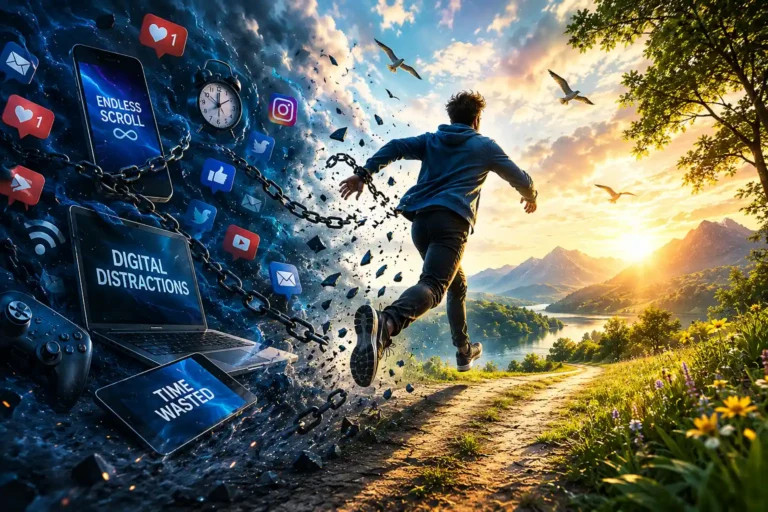
1. Put the phone down during one conversation
Give someone your full attention.
Eye contact, listening and being present can communicate something a text message cannot:
“You matter to me.”
2. Reach out before you need something
Send a message to an old friend.
Ask how they’re doing.
And don’t make the conversation about productivity, networking or getting something in return.
3. Create recurring connection
A weekly walk, monthly dinner, morning coffee or regular phone call can become an anchor.
Relationships often grow through consistency rather than grand gestures.
4. Join something offline
Try a walking group, book club, sports activity, volunteering opportunity, community class or local organization.
Shared activities can make connection feel more natural because you don’t have to start with a deep conversation.
5. Become the person who reaches out
If you’re waiting for someone else to initiate, you may wait longer than necessary.
Invite someone for coffee.
Check on a neighbor.
Call a family member.
Sometimes connection starts when one person decides to make the first move.
WHO also recommends simple actions such as greeting neighbors, putting away phones to be fully present, joining groups and volunteering as ways individuals can strengthen social connection.
We Don’t Need More Followers. We Need More Belonging.
Perhaps the biggest lesson from the global loneliness crisis is that wellness isn’t only about taking care of the body.
It’s also about taking care of our social world.
We need people we can laugh with.
People we can disagree with safely.
People who know our stories.
People we can call on difficult days.
And, importantly, people who know they can call us.
In an increasingly digital world, meaningful connection may become one of the most valuable forms of self-care.
So the next time you’re scrolling through your phone and wondering why you still feel disconnected, pause for a moment.
Instead of sending another reaction, send a real message.
Instead of watching someone else’s life, call someone you care about.
Instead of waiting to feel connected, create a moment of connection.
Because perhaps the future of wellness isn’t about adding another app, another tracker or another routine.
Perhaps it’s about returning to something we’ve always needed:
People. Presence. Belonging.
The PureLifeWorld takeaway
You don’t need to know everyone. You don’t need hundreds of friends. You simply need meaningful connections that remind you that you are seen, heard and valued.
And sometimes, improving your wellbeing begins with something as simple as saying:
“How are you, really?”
Frequently Asked Questions
Is loneliness a global health problem?
Yes. WHO’s 2025 Commission on Social Connection reported that approximately one in six people worldwide experience loneliness, making social disconnection an important global public-health concern.
Can you be lonely even when you have friends?
Absolutely. Loneliness is about the perceived gap between the connections you have and the connections you want or need. Someone can have many social contacts and still feel emotionally disconnected.
Does social media cause loneliness?
Not necessarily. Digital technology can help people maintain relationships and find communities, but excessive or harmful use and negative online interactions can contribute to social disconnection. The effect depends on how technology is used and the individual’s circumstances.
How can I reduce loneliness?
Start small. Contact someone you trust, make regular plans, join a community activity, volunteer, spend time with people without your phone, and prioritize relationships that feel meaningful rather than simply increasing the number of social interactions.
Editorial note: This article is intended for general education and wellbeing awareness. Persistent loneliness, depression, anxiety or feelings of distress can be difficult to manage alone. Consider speaking with a qualified mental-health professional or an appropriate local support service if these feelings are significantly affecting your daily life.