The 9 Pillars of Wellness
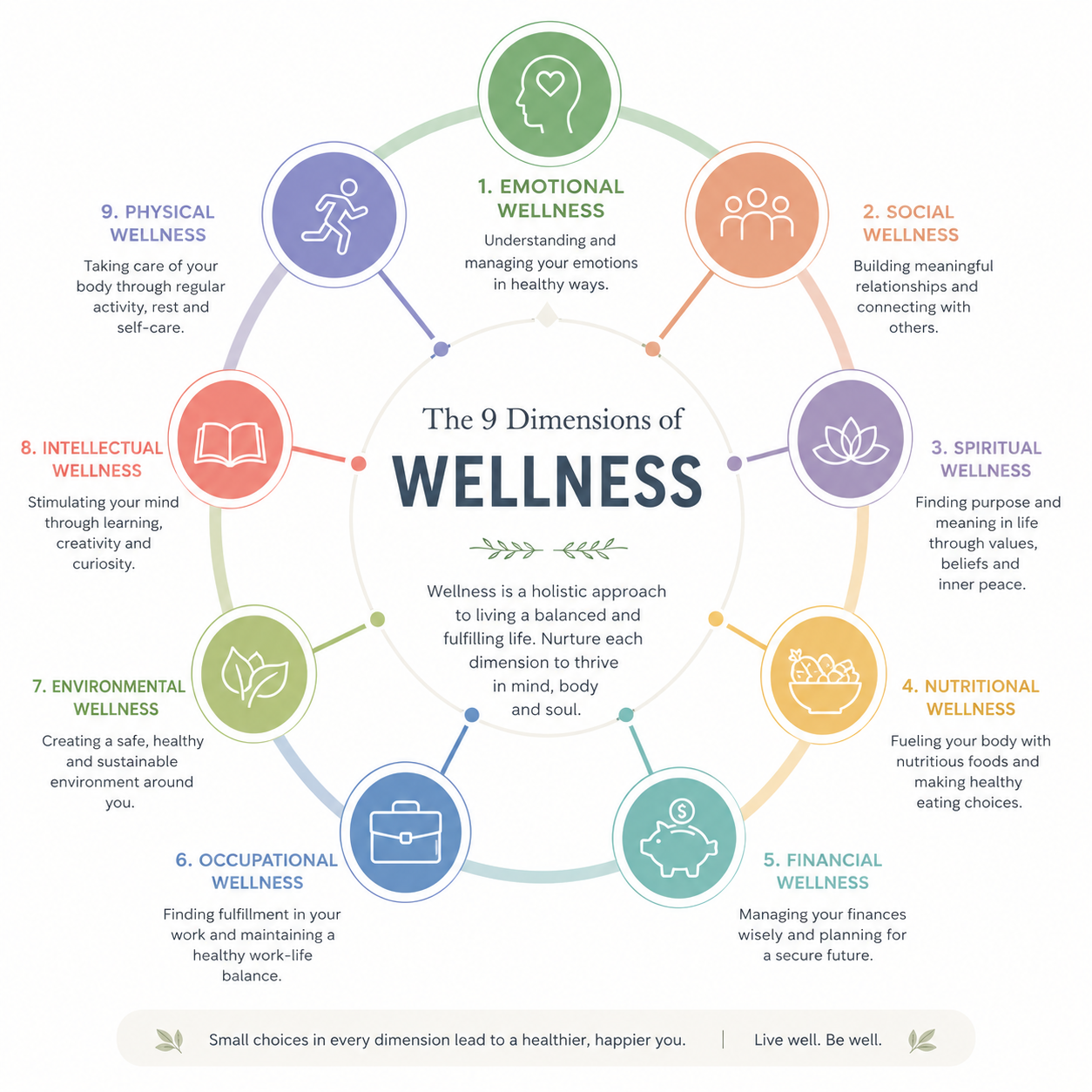
The 8 pillars of Wellness represent a holisctic framework interconnected together to achieve a balanced and healthy life. These are interdependent and negkecting anyone of them could impact the other.
Everyone’s path to wellness is unique. You may find some areas of wellbeing easy to maintain, while others require more attention and effort. By exploring each of the six pillars of wellness and making small, meaningful improvements where needed, you can create a healthier, more balanced lifestyle that supports your overall happiness and long-term wellbeing.
- Physical
- Emotional
- Social
- Spiritual
- Intellectual
- Occupational
- Environmental
- Nutritional
- Financial
Physical Wellness
Physical wellness consists of recognizing the need for physical activity, healthy food choices , and sleep, It also consists the reduction of unhealthy behaviors such as smoking, recreational drug use and excessive alcohol consumptions as well as preventing illness and injury or managing chronic health conditions. These factors can help give you the energy you need to deal with stress, handle daily activities and live a long and full life.
Some points to consider
- Understand how and Why you body works
- Have proper sleep
- Have a healthy diet
- Spend sometime with nature
- Regular health check-ups
- Feel comfortable with your physical appearence
- Regular Excercise
Emotional Wellness
Emotional wellness is the ability to understand, process, and navigate your feelings. It involves building resilience to handle life’s daily stresses, embracing your emotions without judgment, and maintaining a balanced, positive connection with yourself and others
Some points to consider
- Be aware of your feelings
- Take time for yourself
- Develop the skills to handle stress, irritations, crises, etc.
- Practice gratitude
- Establish, and maintain intimate and loving relationships
- Have positive feelings about yourself by developing healthy self-esteem and self-concept
Social Wellness
Social wellness is the ability to build and maintain healthy relationships. It is a vital dimension of overall well-being that significantly boosts mental health, lowers stress, and increases life satisfaction. It creates a sense of connection, belonging and a support system
Some points to consider
- Create and maintain close friendships
- Be confiident interacting with individuls or group of people
- Set healthy boundaries
- Cultivate a strong sense of community and belonging among individuals with diverse backgrounds, perspectives, and experiences.
- Be a responsible citizen
Spiritual Wellness
Spiritual wellness is an ongoing journey of finding meaning, purpose, and a deeper sense of fulfillment in life. It can be expresed in any forms like faith, values, ethics, beliefs etc. It involves developing a deeper appreciation for the beauty, complexity, and interconnectedness of life, as well as the powerful natural forces that shape our world and the universe around us.
Some Points to consider
- Practicing mindfulness or Meditation
- Express gratitude
- Live by your belief and values
- Spend time developing spirituality
- Spending time in nature
Intellectual Wellness
Intellectual wellness involves recognizing and nurturing your creative potential while continually seeking opportunities to learn, grow, and develop new skills. It encourages you to explore new interests, develop creative thinking, gain fresh perspectives, and continuously build your knowledge and skills. Rather than being defined by degrees or IQ, it reflects your willingness to grow, learn, and keep your mind active and open to new possibilities.
Some points to consider
- Be open to new experiences and ideas in all areas of your life
- Read and learn new things
- Learn creative hoppies
- Feel competent in intellectual and academic activities
- Solve puzzels, play strategic games, think new ideas
Occupational Wellness
Occupational wellness is about feeling fulfilled by the work you do while maintaining a healthy balance between your professional and personal life. It goes beyond earning a paycheck and focuses on finding purpose, satisfaction, and opportunities for growth in your career or daily activities. When you enjoy what you do and have time to nurture other important aspects of your life, you are more likely to feel motivated, productive, and overall happier.
Some points to consider
- Work-Life Balance: Set clear boundaries between professional duties and personal leisure time.
- Continuously learning new skills and seeking opportunities for growth.
- Stress management
- Do what you find motivating and interesting
- Feel good about your achievements
Environmental Wellness
Environmental wellness is about creating healthy, safe, and supportive surroundings for yourself and others while being mindful of your impact on the planet. It encourages living in harmony with nature, making sustainable choices, and taking responsibility for protecting the environment for future generations.
Somep points to consider
- Spendi time outdoors and appreciating the mental and physical benefits of nature immersion.
- Practicing conservation and eco-friendly habits to minimize your carbon footprint.
- Be aware of how your external environment affects you
- Maximize natural lighting in your living and work spaces
- Conserve resources
Nutritional Wellness
Nutritional wellness is about making mindful food choices that nourish your body and support your overall health. It focuses on eating a balanced diet rich in essential nutrients that provide energy, strengthen the body, and promote mental and emotional wellbeing. Rather than following restrictive diets, nutritional wellness encourages healthy eating habits that can be sustained for a lifetime.
Some points to consider
- Eat healthy
- Prioritize a colorful variety of vegetables, fruits, whole grains, and proteins.
- Limit the intake of ultra-processed foods, added sugars, and unhealthy fats.
- Maintains a robust immune system
- Ensure adequate water intake
Financial Wellness
Financial wellness is the ability to effectively manage your financial resources in a way that supports both your current needs and future goals. It involves developing healthy money habits, such as budgeting, saving, investing, and managing debt responsibly. When you feel confident and in control of your finances, you can reduce financial stress, make informed decisions, and focus more on living a balanced and fulfilling life.
Some points to consider
- Save 3 to 6 months of living expenses for unexpected emergencies or job disruptions.
- Monitor your daily expenses
- Learn how to gain control of expenses
- Save and invest wisely
- Make step by step plans to reach your financial goals