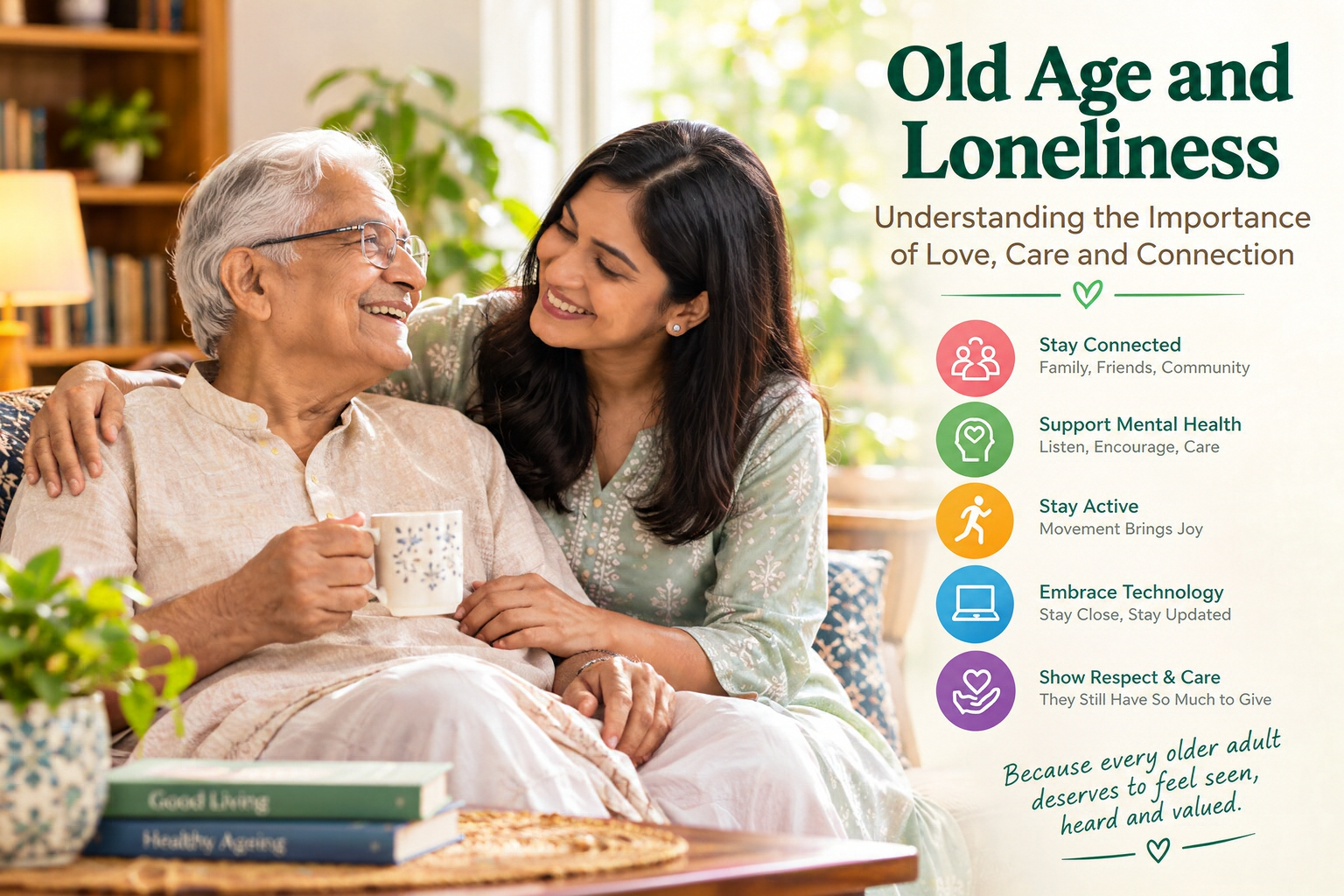
Old Age and Loneliness: Understanding the Importance of Love, Care, and Connection
Growing older is a natural part of life. It brings wisdom, experience, precious memories, and a deeper understanding of the world. Yet, for many older adults, this stage of life can also bring an unexpected challenge: loneliness. The children who once filled the home with laughter may move away, friends may become less accessible, and familiar daily routines may gradually change. A house that was once full of conversations can sometimes feel unusually quiet.
The relationship between old age and loneliness is an important aspect of health and well-being that deserves greater attention. While ageing does not necessarily mean becoming lonely, changes in relationships, mobility, health, and lifestyle can sometimes make it harder for older people to stay socially connected.
The good news is that loneliness is not an inevitable part of ageing. With understanding, companionship, meaningful activities, and support from family and community, older adults can continue to lead fulfilling and emotionally healthy lives.
Understanding Loneliness in Old Age
Loneliness is the feeling of being disconnected from others or lacking the meaningful relationships we need. It is different from simply living alone. Some older adults who live by themselves enjoy an active social life, while others may feel lonely even when surrounded by people.
As people grow older, their social circumstances often change. Retirement can reduce everyday interactions with colleagues, children may move to different cities for work, and the loss of a spouse or close friend can leave a significant emotional gap.
Physical difficulties may also make it challenging to visit friends, attend social gatherings, or participate in activities that once brought happiness.
In India, where family relationships and shared living arrangements have traditionally played an important role, these changes can be especially difficult for some older adults.
Understanding loneliness begins with recognising that older people need more than physical care. They also need affection, respect, conversation, and a sense of belonging.
Why Do Older Adults Experience Loneliness?
There is rarely one single reason for loneliness. It often develops through a combination of personal, social, and environmental changes.
1. Retirement and lifestyle changes
Retirement can bring freedom from professional responsibilities, but it may also reduce daily interaction and a sense of purpose. Without a meaningful routine, some older adults may feel disconnected from the world around them.
2. Living away from family
In many families, adult children move to different cities or countries for education and employment. Although love and affection remain, physical distance can make regular companionship more difficult.
3. Loss of loved ones
The loss of a spouse, sibling, or close friend can deeply affect emotional well-being. Rebuilding social connections after such a loss takes time, patience, and understanding.
4. Health and mobility challenges
Difficulty walking, hearing problems, or other age-related health concerns may limit opportunities for social interaction. When going outdoors becomes challenging, older adults may gradually withdraw from activities they once enjoyed.
5. Feeling overlooked or undervalued
Sometimes, older people feel that their opinions, experiences, and contributions are no longer appreciated. Being excluded from family decisions or conversations can increase feelings of isolation.
Recognising these challenges can help families offer support with greater compassion.
How Loneliness Can Affect Health and Well-Being
Human beings need meaningful social connections throughout life. For older adults, regular interaction can provide emotional comfort, encourage activity, and create a sense of security.
Persistent loneliness and social isolation are associated with poorer mental and physical health. They may contribute to emotional distress, sleep difficulties, reduced motivation, and a lower quality of life. Social isolation is also associated with increased risks of certain health problems, although loneliness alone does not determine an individual’s health.
It is important not to dismiss an older person’s feelings as simply a normal consequence of ageing. When someone regularly expresses sadness, withdraws from favourite activities, or seems unusually disconnected, a caring conversation can be a valuable first step.
If loneliness is accompanied by persistent low mood, anxiety, or difficulties with everyday life, professional support may help.
Practical Ways to Reduce Loneliness in Old Age
Small, thoughtful actions can make a meaningful difference in an older person’s daily life.
1. Make Time for Regular Conversations
A phone call, a video chat, or a relaxed conversation over tea can help an older adult feel remembered and valued. Family members do not always need to make elaborate plans; consistency often matters more than the length of a visit.
Instead of asking only about medicines or appointments, ask about their memories, interests, opinions, and everyday experiences. Listen with patience and genuine interest.
2. Encourage Hobbies and Meaningful Activities
Activities that bring enjoyment can help older adults feel engaged and connected. Gardening, reading, cooking, music, painting, prayer, or learning something new can provide structure and satisfaction.
Community centres, senior groups, libraries, and suitable local activities may also offer opportunities to meet people with shared interests.
The goal is not to keep older people constantly busy. It is to help them discover activities that make their days more meaningful.
3. Strengthen Family Bonds Across Generations
Grandparents have stories, experiences, and wisdom that can enrich family life. Encouraging children and teenagers to spend time with older relatives can create meaningful relationships across generations.
Cooking a traditional recipe together, looking through family photographs, or discussing childhood memories can turn an ordinary afternoon into a treasured experience.
Older adults should also be included in family discussions and decisions wherever appropriate. Feeling respected is an important part of feeling connected.
4. Support Gentle Physical Activity
Physical activity can support general health and may also create opportunities for social interaction. Depending on individual abilities, older adults might enjoy short walks, gentle stretching, chair-based exercises, or group activities recommended by a healthcare professional.
Spending time outdoors with a friend or family member can provide both movement and companionship.
Activities should always be adapted to the person’s health, comfort, and mobility.
5. Make Technology Easier to Use
Technology can help older adults stay connected with relatives and friends who live far away. Video calls, family messaging groups, and online interest communities can make communication more accessible.
Family members can help by explaining devices patiently, adjusting settings for easier use, and practising calls together.
Technology should complement personal relationships rather than replace them. Older adults also deserve guidance on recognising online scams and protecting their privacy.
The Role of Society in Supporting Older Adults
Reducing loneliness is not solely the responsibility of families. Communities can also help create an environment where older adults feel welcome and included.
Neighbourhood groups, community organisations, libraries, and senior clubs can provide opportunities for social participation. Accessible public spaces and age-friendly activities can help people remain involved even when mobility becomes more difficult.
A simple greeting to an elderly neighbour, an invitation to a community gathering, or an offer to help with an everyday task can communicate care and respect.
Most importantly, society should recognise that ageing does not reduce a person’s worth, individuality, or need for meaningful relationships.
Conclusion: Growing Older Should Never Mean Feeling Forgotten
Old age can be a beautiful stage of life when it is supported by dignity, companionship, and a sense of purpose. Although loneliness can affect older adults for many reasons, it should never be treated as something they simply have to accept.
A regular phone call, a shared meal, a patient conversation, or an invitation to participate in family life may seem like a small gesture, but it can carry deep emotional meaning.
Let us remember that older adults have spent years caring for others, building families, sharing knowledge, and contributing to their communities. They deserve the same warmth, attention, and understanding in return.
We may not always be able to remove every challenge associated with ageing, but we can make sure that older people know they are seen, heard, and valued.
Because growing older should mean gaining wisdom and enjoying life’s memories, not feeling forgotten. Sometimes, the greatest gift we can offer an older person is simply our time, our attention, and our genuine companionship.