
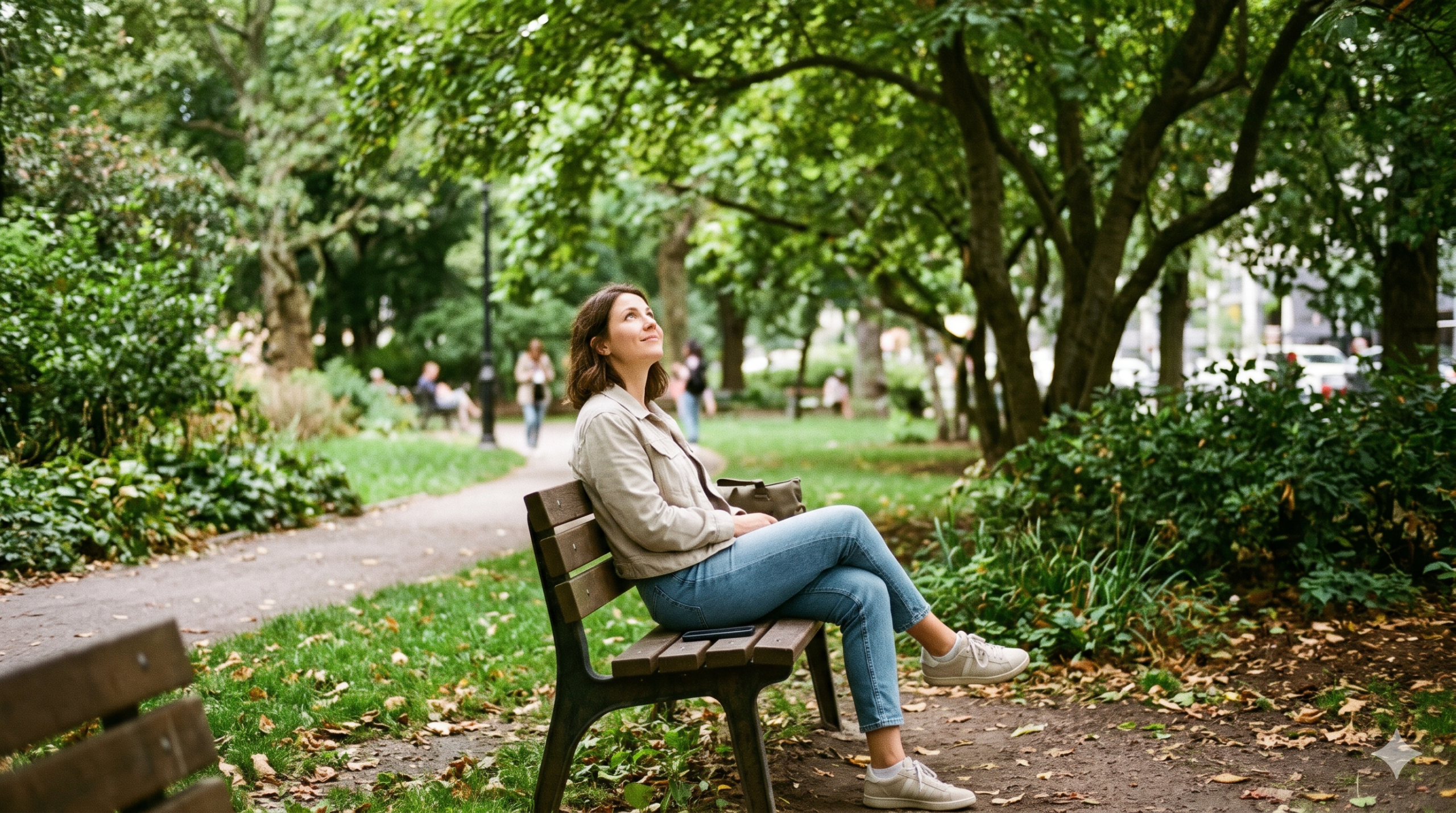
The Nature Deficit: Why Your Body and Mind May Be Craving the Outdoors
What If Your Body Is Asking for More Nature?
When was the last time you spent an hour outside without looking at your phone?
Not walking from the car to the office.
Not sitting outside while answering emails.
Not exercising while listening to a podcast.
Just being outdoors.
For many of us, the answer may be surprisingly difficult.
Modern life has made it incredibly easy to spend most of our day inside. We work indoors, exercise indoors, shop online, socialize through screens and often relax by watching another screen.
We have become incredibly good at staying connected to the world while becoming increasingly disconnected from the natural world around us.
And that raises an interesting wellness question:
Could we be experiencing a “nature deficit”?
The term isn’t a formal medical diagnosis. Instead, it describes a growing concern that modern lifestyles can reduce our everyday contact with nature.
And perhaps the solution doesn’t require another app, supplement or complicated wellness routine.
Perhaps we simply need to go outside.
What Is the Nature Deficit?
The idea of a nature deficit describes the lack of regular contact with natural environments in modern life.
The concept became popular through discussions about children spending less time outdoors, but it applies to adults too.
Think about a typical day.
You wake up in a bedroom.
Travel inside a vehicle.
Work in a building.
Eat lunch indoors.
Return home.
Watch television.
Scroll on your phone.
Sleep.
There may be very little interaction with trees, soil, sunlight, natural sounds, fresh air or open spaces.
This doesn’t mean modern technology or indoor living is inherently unhealthy.
It means that nature is an important part of the human environment that can easily disappear from everyday life.
Why Do We Spend So Little Time Outside?
There isn’t one reason.
Modern cities are designed around convenience. Work and education largely happen indoors. Many people have demanding schedules. Screens provide endless entertainment. Cars and public transportation reduce the amount of walking we naturally do.
Then there is the simple fact that indoor environments are comfortable.
a) Air conditioning keeps us cool.
b) Heating keeps us warm.
c) Food arrives at our door.
d) Entertainment is available instantly.
e) We don’t have to go anywhere.
But convenience can have an unintended consequence.
We may stop noticing how much we miss the outside world.
Nature and Mental Wellbeing
One of the most interesting areas of research concerns the relationship between exposure to nature and psychological wellbeing.
Studies have associated exposure to natural environments with outcomes such as improved mood, reduced stress and greater psychological restoration. The World Health Organization has also highlighted the potential health benefits of urban green spaces, including opportunities for physical activity, relaxation and social interaction.
That doesn’t mean a walk through a park is a cure for depression or anxiety.
Mental health is complex.
But it does suggest that nature can be one useful piece of a broader wellbeing lifestyle.
And sometimes the experience is almost immediate.
a) You leave a busy street.
b) Walk underneath trees.
c) Hear birds.
d) Feel the breeze.
e) See an open sky.
For a few minutes, your brain isn’t being asked to process dozens of notifications.
Nothing is demanding your attention.
That can feel surprisingly restorative.
Your Brain Wasn’t Designed for Constant Notifications
Consider how often your attention is interrupted.
A message.
An email.
A social-media notification.
A headline.
A calendar reminder.
A work request.
Another video.
Even when nothing is happening, we often create stimulation ourselves by checking our phones.
Nature offers something completely different.
A tree doesn’t send a notification.
A cloud doesn’t ask you to respond.
A walking trail doesn’t demand that you multitask.
Natural environments can give the mind an opportunity to shift away from constant directed attention and toward a calmer form of awareness.
That may be one reason people often describe time in nature as mentally refreshing.
The Simple Power of Walking Outdoors
You don’t need a forest to experience the benefits of being outside.
A city park can work.
A quiet neighborhood street can work.
A beach.
A garden.
A walking trail.
Even a few trees outside your workplace can provide a change of environment.
And when you combine nature with walking, you get two healthy habits at once.
Regular physical activity supports cardiovascular health, mental health, sleep and overall wellbeing. The WHO recommends regular physical activity for people across the lifespan and emphasizes that movement can include everyday activities such as walking, cycling, recreation and household tasks.
You don’t necessarily need an intense workout.
A walk is still movement.
And when that walk happens outdoors, it can also provide a mental break from your indoor environment.
Nature Doesn’t Have to Mean a Weekend in the Mountains
One misconception about outdoor wellness is that you need access to spectacular landscapes.
You don’t.
If you live in a large city, your version of nature might be a small public garden.
If you live in an apartment, it might be a balcony with plants.
If you have a backyard, it might be gardening.
If you live near the coast, it might be an evening walk beside the water.
The goal isn’t to create a perfect wilderness experience.
It’s to bring more natural experiences into ordinary life.
What About Forest Bathing?
You may have heard of forest bathing, a wellness practice inspired by the Japanese concept of shinrin-yoku.
Despite the name, you don’t actually need to bathe in a forest.
The idea is simply to spend mindful time among trees, slowing down and engaging with your surroundings through your senses.
Notice the smell of leaves.
Listen to the wind.
Look at different shades of green.
Feel the texture of tree bark.
Pay attention to your breathing.
The practice has become popular internationally as part of the broader nature-wellness movement.
But you don’t need to follow a formal technique.
You can simply walk through a green space and pay attention.
The Nature-Screen Balance
Here’s an experiment worth trying.
Take your next outdoor walk without scrolling.
No social media.
No emails.
No work messages.
You don’t even have to listen to a podcast.
Instead, notice what’s around you.
What can you hear?
What can you see?
What does the air feel like?
How does your body feel while walking?
At first, you might find it strangely difficult.
We’re so accustomed to stimulation that silence can feel uncomfortable.
Give it time.
Boredom isn’t always a problem that needs fixing.
Sometimes it’s the doorway to noticing what’s around you.
Could Nature Improve Sleep?
Your relationship with the outdoors may also influence your daily rhythm.
Natural light is an important environmental cue for the body’s circadian system. Getting daylight, particularly earlier in the day, can help reinforce the timing of the sleep-wake cycle.
This doesn’t mean sunlight is a treatment for sleep disorders.
But spending some time outdoors during daylight can be a simple addition to a healthy daily routine.
Try opening the curtains in the morning.
Have breakfast near natural light.
Take a short morning walk.
Spend part of your lunch break outside.
Small changes can add up.
Nature as a Wellness Habit, Not Another Task
This is perhaps the most important point.
Don’t turn nature into another wellness challenge.
You don’t need to track how many minutes you spent outdoors.
You don’t need a special outfit.
You don’t need an expensive retreat.
You don’t need to photograph every walk.
You simply need to make space for being outside.
Try:
A 10-minute morning walk
Use it as a transition between waking up and starting your day.
An outdoor lunch
Even 15 minutes outside can break up a long indoor workday.
A weekend nature ritual
Visit a park, beach, trail or garden regularly.
Grow something
Gardening connects you with soil, plants and natural rhythms.
Leave your phone behind occasionally
Give your attention somewhere else to go.
What Cities Can Teach Us About Wellness
The nature conversation isn’t only about individual lifestyle choices.
It also raises bigger questions about how we design our communities.
Do people have access to safe parks?
Are streets walkable?
Are there trees and shaded areas?
Can children play outdoors?
Are public spaces designed for people to meet?
Urban green spaces can provide opportunities for physical activity, relaxation and social interaction, making access to nature a public-health issue as well as a personal wellness choice.
A healthier future may therefore require more than encouraging individuals to spend time outside.
It may require building cities where going outside is easy.
We Don’t Need to Escape Modern Life
Nature isn’t an alternative to modern life.
It can be part of modern life.
You can use technology and still take a walk.
You can live in a city and still spend time among trees.
You can work online and eat lunch outdoors.
You can love your smartphone and occasionally turn it off.
The goal isn’t to reject technology.
It’s to make sure technology doesn’t become the only environment in which we live.
The PureLifeWorld Takeaway
We often search for complicated solutions to feeling better.
A new routine.
A new supplement.
A new app.
A new productivity system.
But sometimes wellness begins with something much simpler.
Step outside.
Feel the sun.
Walk under the trees.
Listen to the wind.
Watch the sky change.
Let your mind wander.
Talk to someone while walking instead of texting them.
And for a few minutes, allow yourself to experience the world without needing to measure, record or optimize it.
The nature deficit may not have a single solution.
But reconnecting with nature can be a beautifully simple place to begin.
Because perhaps we don’t always need more stimulation.
Sometimes, we simply need more sky.
Frequently Asked Questions
What is the nature deficit?
The nature deficit is a term used to describe reduced everyday contact with natural environments, particularly in modern urban and technology-focused lifestyles. It is not a formal medical diagnosis.
What are the benefits of spending time in nature?
Research suggests that exposure to natural environments can support psychological wellbeing, stress reduction, physical activity and social interaction. Benefits can vary from person to person.
How much time should I spend in nature?
There is no universally established amount that everyone needs. Start with something realistic, such as a 10–20 minute outdoor walk, and gradually make outdoor time part of your routine.
Does nature help mental health?
Spending time in nature may support mood and stress management, but it should not be considered a replacement for professional mental-health care when someone is experiencing significant symptoms.
Do I need to live near a forest to benefit from nature?
No. Parks, gardens, tree-lined streets, beaches and other green or blue spaces can provide opportunities to connect with the natural environment.
Medical & wellness disclaimer: This article is intended for general educational purposes and is not a substitute for professional medical advice, diagnosis or treatment. If you are experiencing persistent mental or physical health concerns, speak with a qualified healthcare professional.